 Support
Support
Support

Your college or university wants to attract the best and brightest students—but so does every other college and university in the country. How to market a college is becoming a hot topic because every learning institution is aggressively marketing its degree programs, campuses, and online learning programs—which means it’s difficult to stand out to prospective students.
Education is a huge investment, so students have a lot to consider when selecting the right school. How much does it cost? Who are the most notable alumni? What kinds of career opportunities will a degree from this college provide?
Your marketing programs must answer these questions while also presenting your school as the unique environment it is. These college marketing strategies will help you increase interest in your school and attract more potential students.
Keep reading to learn about the best university marketing strategies and how to use them with success. Or, give us a call at digital marketing services can help!
Search engine optimization, or SEO is the process of boosting your website’s rankings in search engines like Google.
Many prospective students will use search engines to find schools that fit their needs. In order to reach them during the search process, it’s important that your website appears on the first page of search results for the keywords they’re using.
It is important that your university is on the first page of results because 75% of people don’t click past it. If you aren’t on the first page, students may never find your school — and you could lose great applicants to other schools with similar programs simply because they outrank you.
An important part of SEO is selecting keywords. Your keywords will determine when you appear in the search results.
It is best to choose long-tail keywords rather than short-tail keywords. Long-tail keywords contain 3 or more words, while short-tail keywords only contain 1 or 2 words. You want to choose long-tail keywords because they are more specific to a user’s search.
You will get more credible traffic by utilizing long-tail keywords. Since these keywords are specific, there is less competition for them. This will enable you to move on to the first page of results easier.
If you are trying to rank for a particular keyword, you need to utilize that keyword on your pages. Google aims to deliver the most relevant results for each of its users, and using the keywords they search shows that you have the information they’re looking for.
You can incorporate your target keywords in many different places, including your headings, titles, meta descriptions, and throughout the text.
It is important that you don’t overuse keywords, though, and only want to use them in places where they fit naturally. Overusing keywords is known as keyword stuffing and can negatively impact your rankings.
Another important part of SEO as a college marketing strategy is link building. You need to earn links from credible websites to boost your rankings in search results.
Links are vital to your SEO campaign because they show other people that your site is trustworthy. This builds your reputation and authority. When credible sites link to your site, Google sees that your content is reputable.
Google wants to provide users with the best possible results, so they want to rank credible and helpful sites higher. When you obtain links from credible sites, you build your own ranking power over time.
A great way to build links is to produce content. When you publish great content, other site owners and editors can link to it as a resource in their own content.
If they like your content, they may include it on their own site and link back to your page as the source. This shows search engines that authority sites see your site as trustworthy. You will be able to positively impact your ranking this way.
An important part of SEO is providing users with a positive user experience. You want them to enjoy their time on your website. One way you can provide users with a great experience is through your website’s design.
First impressions have a huge impact. As soon as a student goes on your website, they will begin making judgments about your university. You want them to look at your website and be drawn in to learn more about your school.
Your design has a huge impact on whether or not students have a positive experience. If your website appears outdated or unattractive, prospective students will leave your site. You don’t want to drive students away based on appearances.
Your navigation is also important to prospective students. If they are on your website for the first time, you want them to be able to find all the important information they need. You don’t want them to struggle to find important information.
The best way to help students find information is to make your page headings simple. You may opt for sections like “Academics,” “Admissions,” and “Campus Life.” These are broad headings that can include numerous things that students are seeking. A simple and clean navigation will keep students on your page longer because they will be able to find the right information.
Lastly, it is important that your pages load quickly to deliver information and content to visitors. Users don’t like to wait around for slow-loading pages. They will return to the search results and choose another college’s website if your site loads too slowly.
This increases your bounce rate. You don’t want to have a high bounce rate because it negatively impacts your ranking. Google will rank your website lower because they believe that users aren’t having a good experience.
To make sure your page is running at an optimal speed, you can use Google PageSpeed Insights to see where you can improve. You can see how well your page is running and where improvements should be made. If this seems like a time-consuming task, you can opt for page speed services from a digital marketing company.
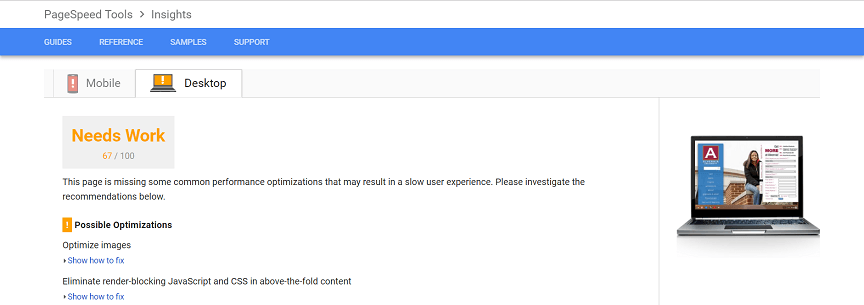
Google takes numerous other factors into consideration when they rank your site. By improving these factors, you will improve your website’s ranking. This will enable your website to rank higher and reach more prospective students.
Pay-per-click (PPC) advertising is another answer for how to market a university. PPC advertisements appear at the top of the search results.
Similar to SEO, these ads are triggered by keywords. You’ll want to use long-tail keywords because there is less competition and they’ll draw in more credible traffic. Once you select the keywords for your ad, you’ll bid for your placement.
The amount you bid for your placement is your maximum bid. This is the amount you are willing to pay per click or the cost-per-click (CPC). You can change your maximum bid at any time.
Once you set your amount, your placement is determined by your maximum bid and your quality score.
One of the best ways to lower your CPC is by choosing long-tail keywords. There is less competition for long-tail keywords, which lowers your CPC because there aren’t as many people bidding for those keywords.
PPC is a great way to draw in interested students. Sixty-five percent of all high intent searches result in clicking on a PPC ad. These ads will draw in more students that are interested in your school.
PPC is a great way to drive in the right traffic. By utilizing PPC, you’ll be able to reach more prospective students and draw them to your university’s website. This can help you gain valuable leads and turn these students into students at your university.
Social media is a key college marketing strategy. People of all ages, who could be your students, are on social media. You want to be able to reach and connect with them.
There are numerous social media platforms you can use to connect with your audience. These platforms include Facebook, Twitter, Instagram, Pinterest, and LinkedIn.
Social media sites offer many opportunities for colleges to connect with students. These sites enable prospective students to get a sense of what it is like to be at that university.
These are great sites for posting photos of your students doing things. You don’t want to use stock photos as they won’t give your school an authentic feeling. It is best to use photos of students who are currently at that school.
You can also use these sites to post events your campus is holding. This gives prospective students insight into campus life. It can entice them further to consider applying to your school.
This is also a great opportunity to post videos. You can make videos of students or faculty talking about why they love your university or what is special about the university.
Your social media pages enable you to directly connect students with information about your university. This is a great opportunity to provide these students with the information they need and show them interesting aspects of your university.
Just like each student has different strengths and goals, every school has its own set of opportunities and selling points. By focusing on your institution’s strengths, your marketing team can stake out a unique position and attract students who are looking for those particular capabilities—and increase the likelihood of inquiries and applications.
You’ll need to look both inward and outward to identify these selling points. Why did current students and alumni choose to attend your school? Why did the faculty choose to teach there? What do your competitors say about your school? How about educational experts and guidance counselors?
If these qualities attracted students in the past, they’ll likely attract more of them in the future.
Selecting a college to attend is a long process for many students. They have to consider academic programs, living arrangements, career opportunities, and extracurricular opportunities, among many other factors.
This means that they’re going to have a lot of questions along the way. Help them answer those questions—and keep your school in their thoughts—by developing a comprehensive communication plan.
The first stage involves raising awareness of your school, highlighting its unique strengths and capabilities as well as its location and activities. Once prospective students have shown interest, continue reaching out so that you remain a part of their decision.
One of the best ways to do this is with a college marketing strategy called lifecycle email marketing. When you send messages based on demographics, past actions, and other factors, you can be sure that you’re always reaching them at the right time with relevant information.
Keep communicating with prospects even after they’ve filled out an application. Unless they’re applying early decision, they may have applied to several other schools. The final step is to show them that your school is the best choice.
Many of your prospective students prefer to use smartphones and tablets over desktop computers. This means you stand a better chance of reaching them if your marketing strategy extends to those devices. If you want prospective students to learn more about your institution—and engage with it—you need to develop a mobile strategy.
Use responsive design, and your website will display and function well on all screen sizes and browsers. Develop content that reads well on mobile screens and enables easy contact via phone or email.
A mobile-friendly marketing strategy not only shows prospective students that your school is up-to-date but will also allow you to more effectively reach them where they already are.
Whether you work at a college with a few hundred students or a large university with several thousand, applicants choose your school for a variety of reasons. Some like the campus or the location, while others are interested in a specific program. Some may be attracted by the number of online learning options available.
You’ll reach more of these prospective students if you optimize your site and social media pages for each of these targeted searches.
Some search terms should appear throughout your site, such as your school’s name and location. However, other terms are appropriate only for specific landing pages, such as degree programs and admissions policies.
When you optimize your pages for keywords that relate to your school’s offerings and benefits, you can reach prospective students looking for those exact qualities.
Other content needs to be optimized the same way. Incorporate your chosen search terms in PPC ads, and write blog posts about the criteria people use to choose a school. Focus on prospects’ priorities and you’ll increase the number of applications you receive with these university marketing strategies.
While recent trends show some marketing channels taking off—mobile, for example—that doesn’t mean every prospective student is using that channel to the exclusion of others. If you want to stay top of mind among potential applicants, you need to develop content for each channel in your marketing strategy.
Publish important program information on your site, as well as answers to frequently asked questions. Write regular blog posts and share them on social media. Send newsletters via email. Create infographics and outreach them to popular publications. Post videos on YouTube.
Regardless of the channels you utilize, you should have a strategy for each. Develop content that appeals to prospective students, and more of them will express an interest in your institution.
The goal of your institution is to educate tomorrow’s leaders, but you need to use today’s marketing strategies to attract them. Incorporate these ideas into your existing strategy to increase awareness, engagement, and enrollment in your college or university.
If you’re ready to start using these college marketing strategies to reach more prospective students, Noble Media Outreach can help. Contact us today to speak with a strategist about our digital marketing services!
Social media is a fantastic way to communicate directly with those who are making a decision about their educational future, and show them why your institution is the best choice.
You can use platforms such as Facebook and Twitter to start conversations with potential students, and to also let them know that you are available to answer any questions they might have about your institution.
Not only is social media a great place to answer questions, but it’s also a great way to draw potential students to your university’s website. For example, you could write a blog that lists what you should pack for your first semester away at college. Not only will you gain traffic to your site, but soon-to-be college students will share your blog with their friends. Just like that, you have the potential to double your website traffic.
Pinterest allows you to get a little more creative. For example, you could create a board where you curate pins about dorm decorating or easy foods to cook in the microwave.
Instagram, on the other hand, is an ideal place to share behind-the-scenes photos of your campus or institution’s staff, showing what life and studies are like—all giving potential students more reasons to tour your grounds.
Content marketing is extremely important to gaining traffic to your institution’s website, and it’s fairly simple to implement.
This higher education digital marketing strategy refers to the act of attracting and appealing to potential customers or leads through the use of interesting, helpful, and unique content. This content could take many forms, including blog posts, articles, webinars, infographics, videos, and so on.
Although content does not often directly lead to conversions or new enrollments on its own, it can increase the trust that potential students or their families have in your institution. Because of its usage of important keywords, it can also help boost your SEO so that your ranking improves.
One of the quickest and easiest ways to implement a content marketing strategy is to start a blog. This blog can contain a variety of topics, as long as it is relevant to your target audience of students. You could write about events on your campus, educational choices and majors, future career paths, and other related topics.
Finally, one of the best ways to communicate with potential students is through email marketing. With email marketing for higher education, you can engage almost one-on-one with interested leads that have opted into receiving messaging from you.
There are a few ways you can use email marketing. If you offer content on your website, you may find some of it valuable enough that you wish to “email gate” it—that is, only offer it for download in exchange for an email address (and subscription to your list). You can then start sending information about your campus or educational programs to the addresses you receive through this method.
You may also consider simply creating an email list where potential students can sign up to receive information, or parents of college-age students can receive updates about enrollment dates, and so on. No matter how you choose to use email, ensure the sign-up locations are highly visible on your website, and the benefits of receiving messages from you are clearly stated.
Years ago, marketing methods like television and radio advertisements, direct mail, paid website banner advertisements, and press releases were the preferred methods to reach your audience.
However, with technology becoming a prevalent part of every-day life, these methods have lost their effectiveness.
The first change occurred with the widespread availability of the Internet. Because consumers no longer have to rely on mass media, or word-of-mouth to learn about an institution—they simply turn to the Internet where they can get their answer at the drop of a pin.
This is why online marketing has become so effective. Using inbound marketing—a collection of marketing methods that prompt a consumer to take action after they are already seeking you out online—you can educate, instruct, and convince, rather than push and shove.
Now that you know all the best practices for marketing your higher education website and programs, it’s time to get started!
If you find you need any help with your SEO, website content, or inbound marketing strategy, feel free to contact Noble Media Outreach. As a leading full-service marketing agency, we can help you get more revenue from the web and dramatically increase their visibility online.
Noble Media Outreach doesn’t offer cookie-cutter plans and one-size-fits-all marketing packages to its clients. We’re happy to build a custom marketing package that suits your needs.
Contact us today to get a free, no-obligation quote from one of our expert web strategists. We can’t wait to hear from you!


If you are looking for quality work then Noble Media Outreach is the best choice for you. At Noble Media Outreach, we don’t just help you market your business; we help you connect, grow, and thrive. Let us be the force that drives your business forward in today's competitive landscape. Together, we can achieve greatness.

We are experienced professionals who valued their customers. Our ambition is to help businesses to do their best in their marketing sector to achieve their goals.